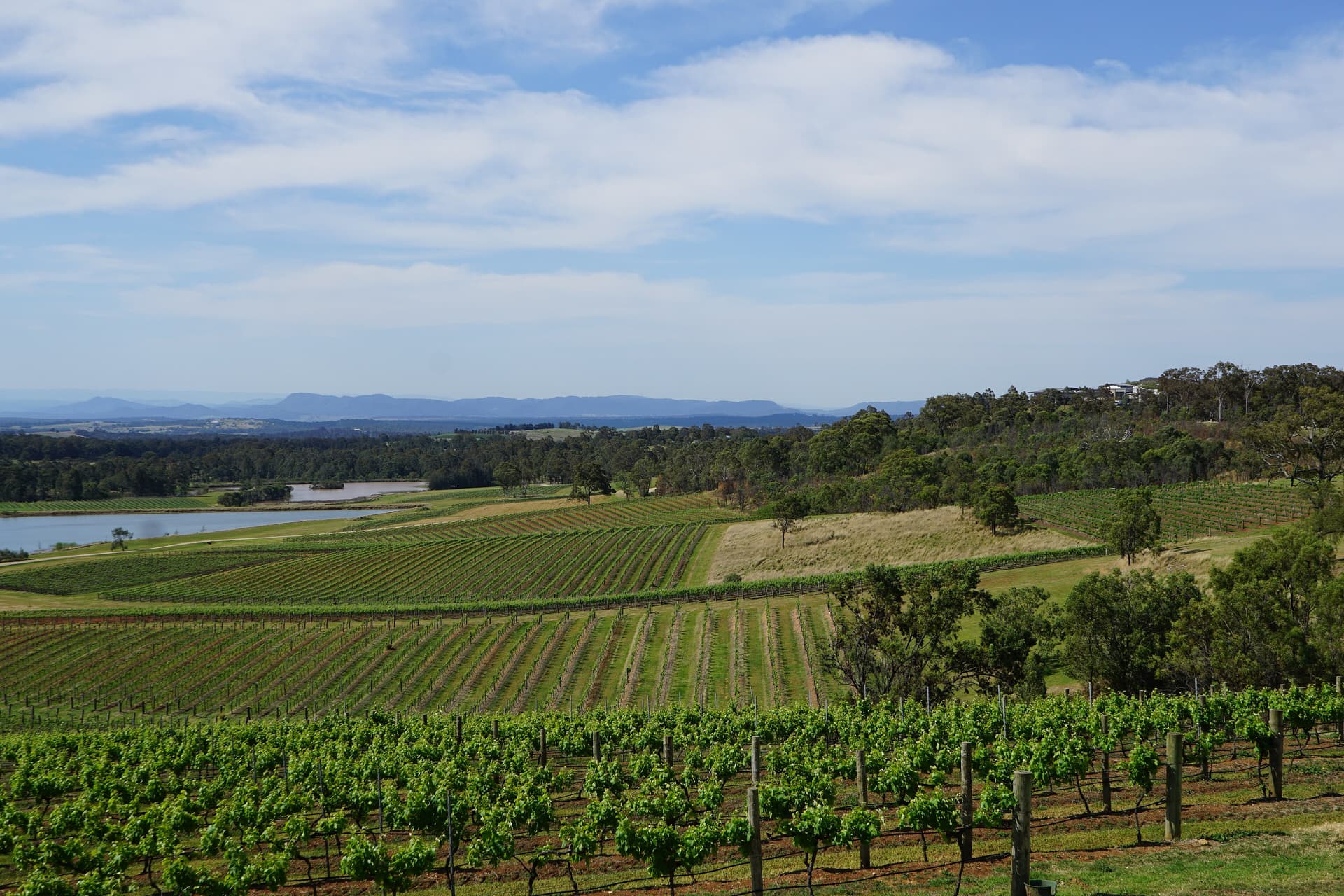
The Hunter Valley is the wine region Sydney grew up with: close enough for a day trip, varied enough for a week. This guide covers how the region works — its wines, its geography, its rules and its rhythms — so that you can plan a visit that fits you.
A short history
The valley is the traditional country of the Wonnarua people. European settlers planted the first vines along the Hunter River in the 1820s, and in the 1830s James Busby returned from Europe with a collection of vine cuttings that became the foundation of much Australian viticulture. By the 1850s and 1860s families such as the Tyrrells, Draytons and Wilkinsons were making wine around Pokolbin; several of those names are still on the labels.
For much of the 20th century the Hunter was known for fortified wine and for the long-lived table wines of Maurice O’Shea at Mount Pleasant. The modern boom began in the 1960s and 1970s, when Sydney wine lovers founded small estates, and tourism followed. Today the region produces only a small share of Australia’s wine but a large share of its wine history.
The wines
- Semillon. The Hunter’s great original: picked early, low in alcohol, unoaked and razor-fresh when young; golden, toasty and honeyed after a decade in bottle.
- Shiraz. Medium-bodied, savoury and earthy, with soft tannins — very different from the powerful Shiraz of South Australia — and capable of ageing for decades.
- Chardonnay. Australia’s first commercial Chardonnays were made here in the early 1970s. Styles range from rich to lean and modern.
- Verdelho. A fruity, easy-drinking white that suits the warm climate and a summer lunch.
- And more. Sparkling wines, rosé, fortifieds and a growing range of Mediterranean varieties such as Fiano, Vermentino and Tempranillo.
The lie of the land
What visitors call “the Hunter Valley” is really the Lower Hunter around Cessnock. Pokolbin is the centre, with most of the famous cellar doors. Lovedale to the east is quieter; Mount View to the south climbs into the hills; Broke Fordwich lies 20 minutes west across the range; and Wollombi is a historic village to the south-west. The Upper Hunter, an hour or more north-west, is a separate and much quieter area.
How to get around the cellar doors
| Option | How it works | Best for | Keep in mind |
|---|---|---|---|
| Day tour from Sydney | Coach or minibus from the city; 3–4 tastings | Visitors without a car or a spare night | About five hours of the day are on the road |
| Local wine tour | Minibus with pickup from your accommodation | Anyone staying in the valley | Popular tours sell out on Saturdays |
| Private driver | A driver and vehicle by the half or full day | Groups with their own list of wineries | You book and pay for the tastings yourself |
| Hop-on hop-off bus | A loop around Pokolbin on a timetable | Independent travellers | Limited days and stops; check it is running |
| Self-drive | Your own or a hire car | Groups with a non-drinking driver | 0.05 limit and random breath tests |
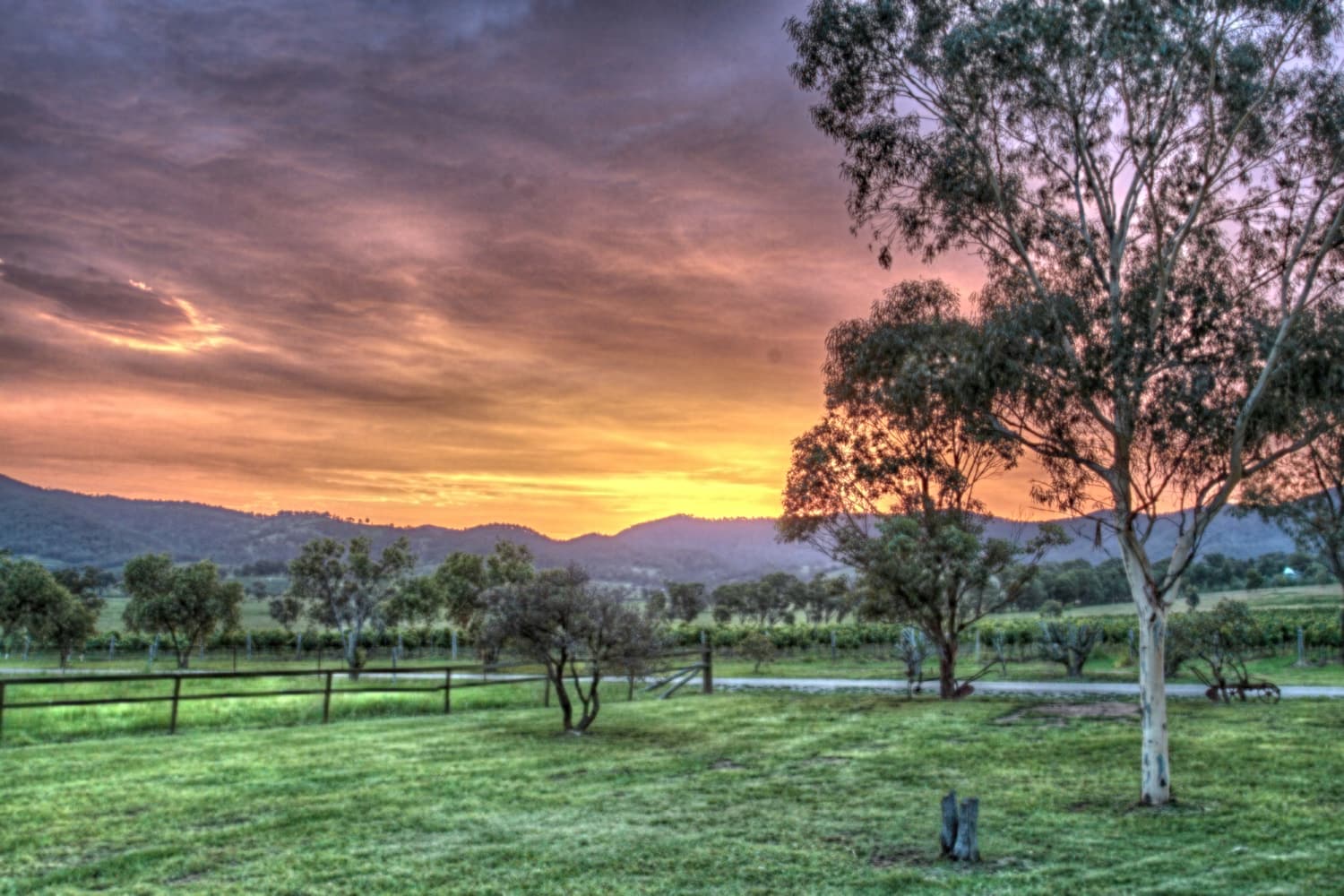 Wine country
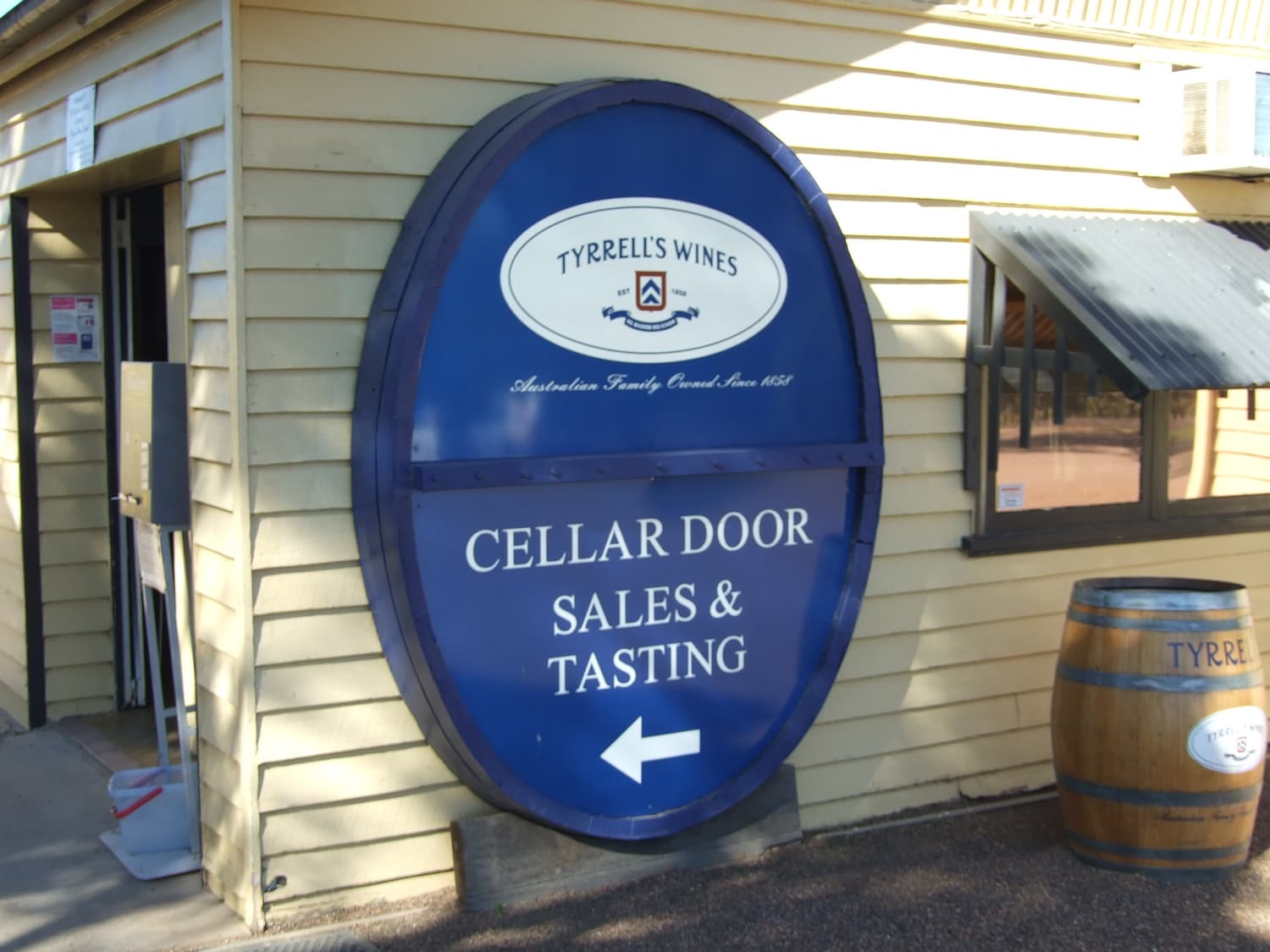 Wine country
Cellar Doors & Hunter Wines
Semillon, Shiraz and how tastings work
More than a hundred cellar doors, from fifth-generation family estates to tiny tin-shed producers. This is the practical guide: the wines the Hunter is known for, the names worth knowing, and how fees, bookings and group rules work today.
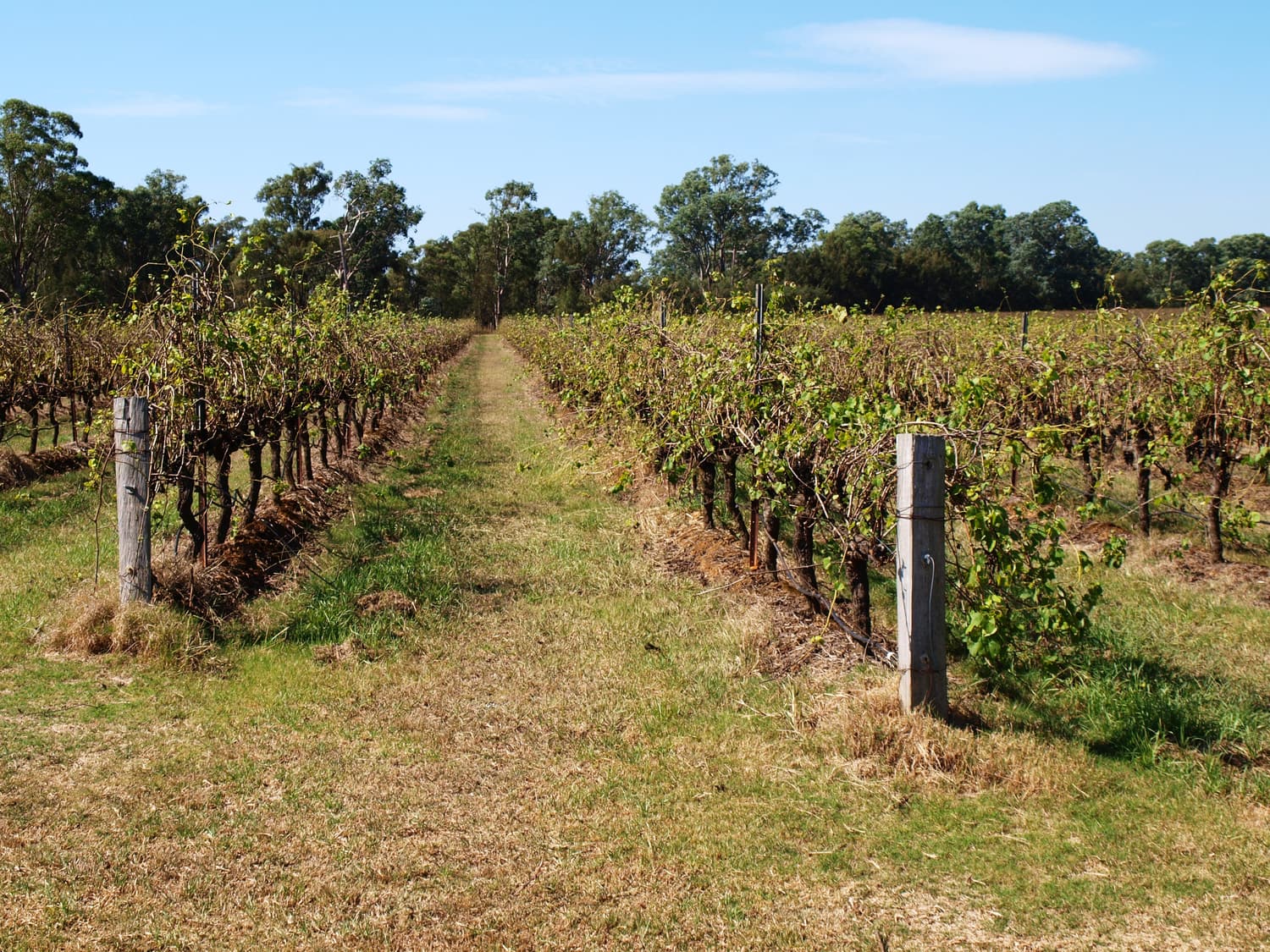 Wine country
 Wine country
Broke Fordwich
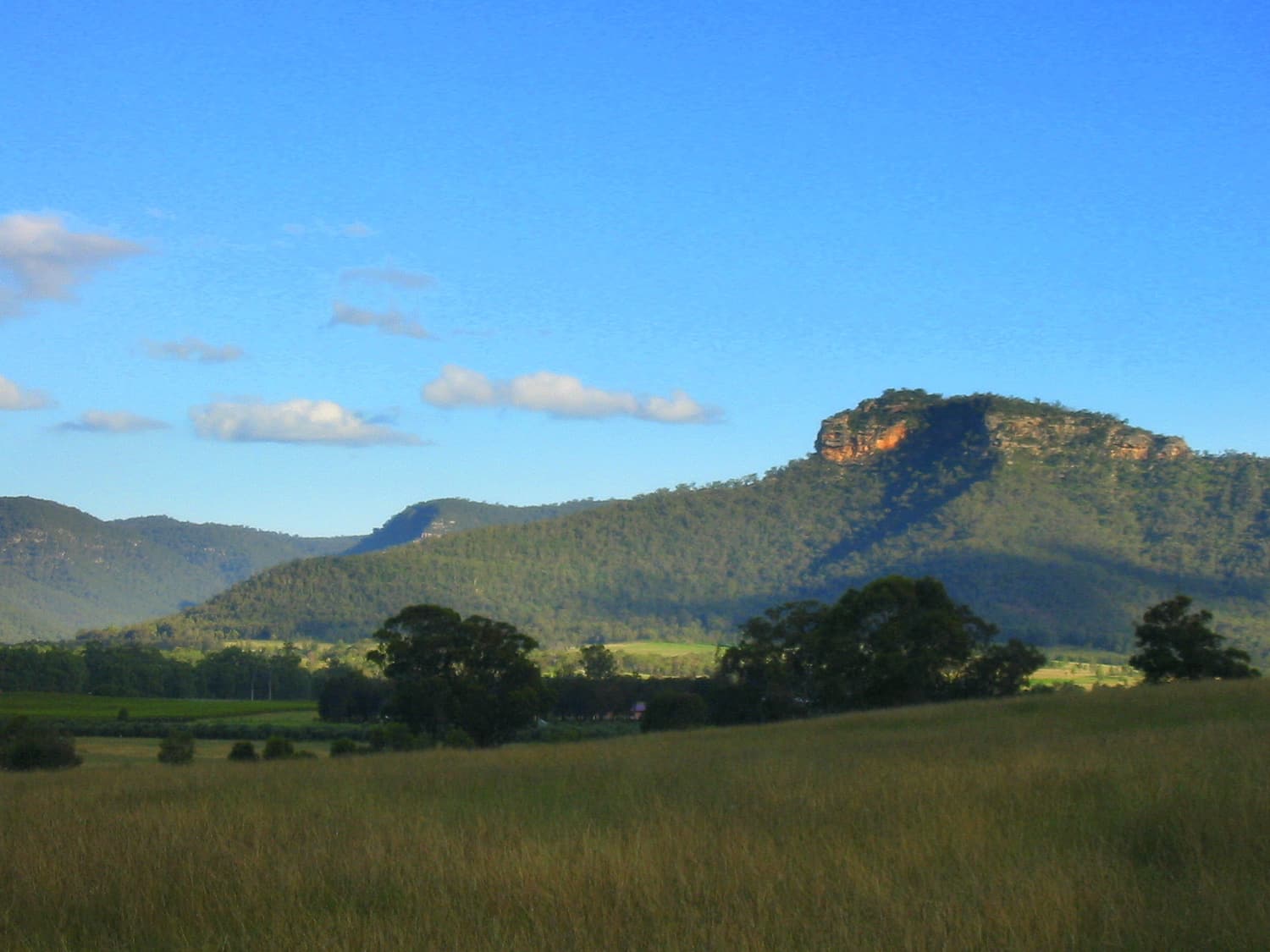
Boutique wineries under Yellow Rock
About 20 minutes’ drive west of Pokolbin, the village of Broke and the Fordwich area form a peaceful sub-region along Wollombi Brook, backed by sandstone cliffs. Expect small producers, organic and biodynamic vineyards and far fewer tour buses.
How cellar door tastings work
Tastings have changed in recent years. Rather than standing at a bar for a free splash, you now usually sit down for a hosted tasting of five or six wines lasting 30 to 60 minutes. Most cellar doors charge a per-person fee, often redeemable if you buy; premium and museum tastings cost more. Fees differ from place to place, so check each winery’s website.
- Bookings: recommended everywhere and close to essential on Saturdays and long weekends.
- Groups: parties of about six or eight and above almost always need to book, and some small cellar doors do not take large groups.
- Hours: typically around 10:00 to 17:00, with the last tasting starting well before closing.
- Age: you must be 18 or over to taste. Children are generally welcome on the premises, but check with each cellar door.
For names to look for and how to plan a day, see the cellar doors guide.
Drink-driving law
Suggested itineraries
One day (from Sydney)
Take a day tour. If you drive yourself, leave by 07:30, book two tastings and a lunch in Pokolbin, add a cheese or chocolate stop, and be on the road home by 16:00.
Two days, one night
Day one: drive up, one booked tasting, a long lunch, check in, kangaroos at dusk, dinner. Day two: a balloon flight at sunrise, then a half-day local wine tour or Hunter Valley Gardens, and home via Wollombi.
Three or four days
Add a full day in Broke Fordwich and Mount View, then continue to Newcastle and Port Stephens for beaches, dolphins and sand dunes before returning to Sydney down the coast.
Beyond wine
There is more to do than taste. Concerts by big-name artists are staged outdoors at Hope Estate, Bimbadgen and other wineries, mostly between spring and autumn. There are three resort golf courses, day spas, horse riding and a wildlife park, and a food trail of cheese, chocolate, olive oil, gin and beer.
Adding the Gold Coast or Tasmania
Plenty of visitors fold the Hunter into a longer Australian trip. For surf and beaches, Sydney has frequent flights to Gold Coast Airport, which sits right beside Coolangatta — our Coolangatta travel guide covers Snapper Rocks, the patrolled beaches and day trips to Byron Bay.
For cool mountain scenery, there are direct flights from Sydney to Hobart in Tasmania; our guide to kunanyi / Mount Wellington explains how to get from Hobart to the summit and which walks to take on the mountain.
Money and costs
- The currency is the Australian dollar (AUD). Cards and contactless payment are accepted almost everywhere; carry a little cash for markets.
- Budget for tasting fees at each stop unless you are on a tour that includes them.
- Accommodation is priced by demand: Saturday nights cost far more than midweek, and many places require a two-night minimum at weekends.
- Tipping is not expected in Australia, though it is appreciated for excellent service.
Safety and health
- Sun and heat: summer days often pass 30 °C, sometimes 40 °C. Wear a hat and sunscreen and drink water between tastings.
- Roads: kangaroos and wombats are active at dawn, dusk and night. Slow down, and avoid driving after dark where you can.
- Bushfires and storms: in summer, check the NSW Rural Fire Service and weather warnings on hot, windy days.
- Wildlife: snakes live in the bush and long grass; stay on paths and leave them alone.
- Emergencies: dial 000. The nearest hospitals are in Cessnock, Maitland and Singleton.
What to pack
- Photo ID if you look under 25 — cellar doors may ask for proof of age.
- A hat, sunglasses and sunscreen in every season.
- A warm layer for evenings and winter mornings, when temperatures drop sharply.
- Flat, closed shoes for vineyard walks and balloon flights.
- A cool bag for cheese and chocolate, and space in the car for wine.
Practicalities
- Supplies: Cessnock is the service town, with supermarkets, pharmacies and fuel.
- Connectivity: mobile coverage is good around Pokolbin and Lovedale and patchy towards Wollombi and the national parks.
- Families: the gardens, the wildlife park, resort pools and chocolate shops keep children busy; many cellar doors have lawns.
- Dogs: a number of cellar doors and guesthouses welcome dogs — ask first.