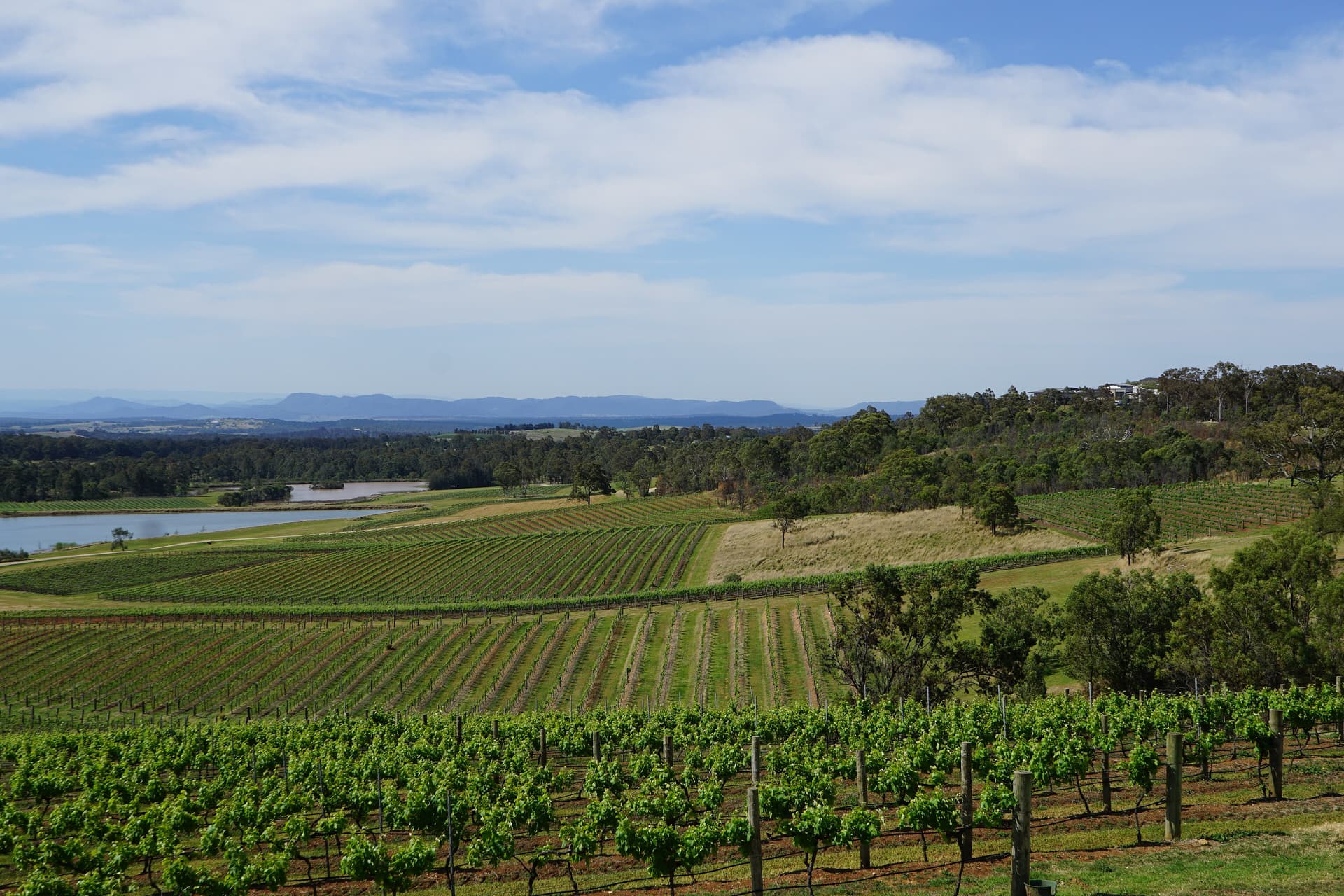
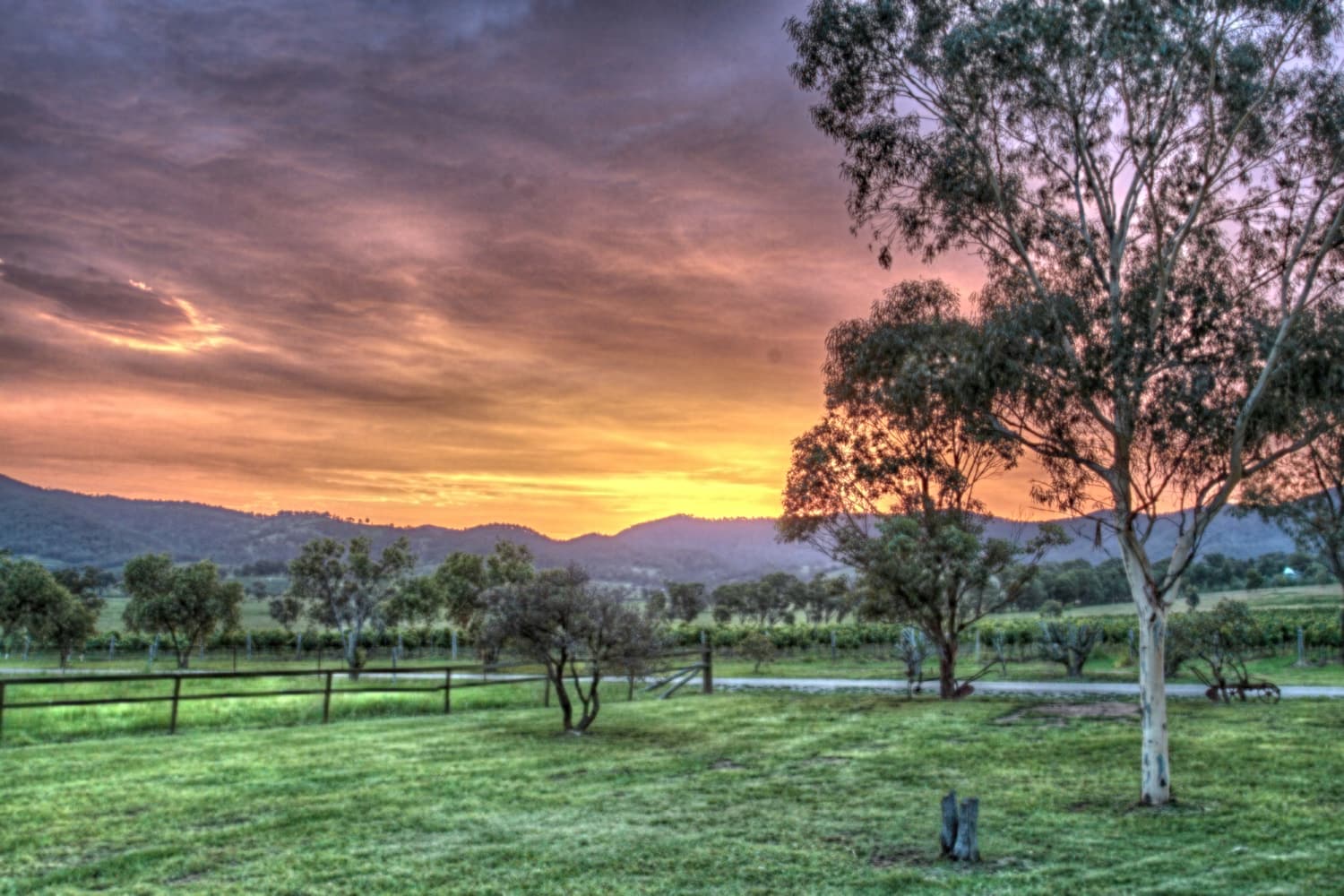
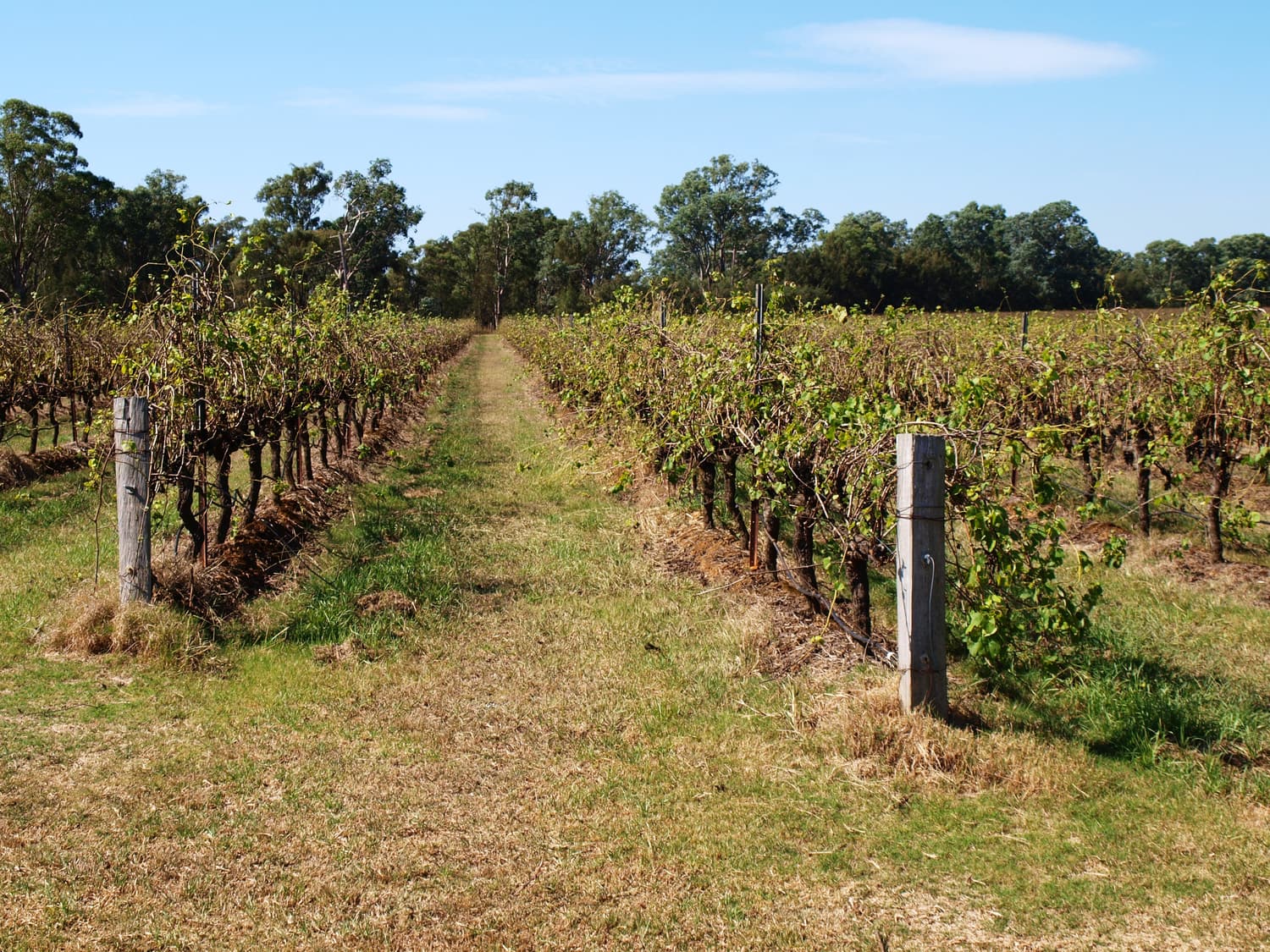
Calm mornings, open paddocks and a patchwork of vines make the Hunter Valley one of the most popular places in Australia for a hot-air balloon flight. Several long-established operators fly here every day of the year when the weather allows.
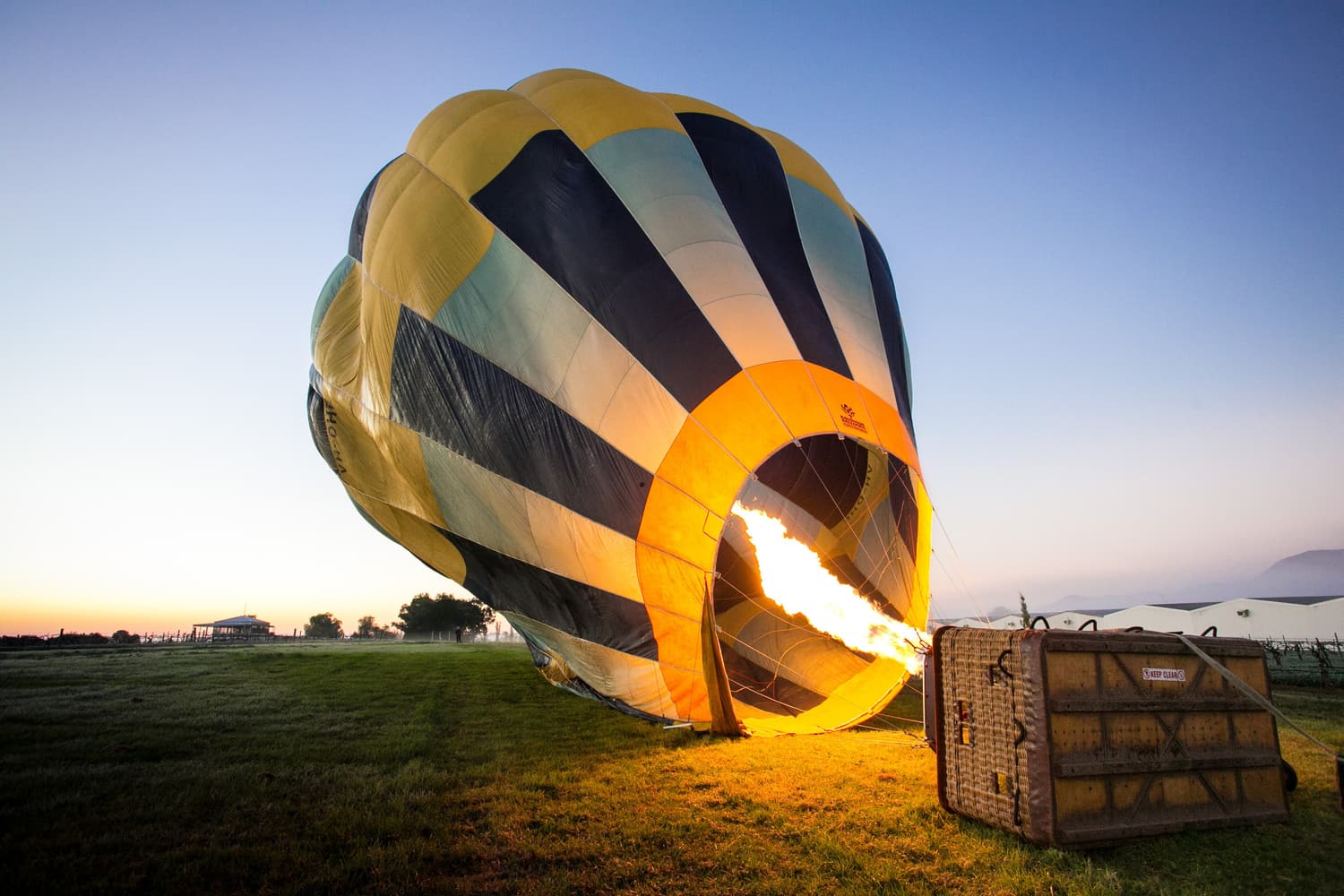
The pattern is always the same: you meet about an hour before sunrise, help or watch as the balloon is inflated, then fly for roughly an hour over Pokolbin, Lovedale and Rothbury. Kangaroos are often seen from above. After landing there is a breakfast, traditionally with a glass of sparkling wine.
Top things to do: Hot-Air Ballooning
Fly at sunrise
Balloons fly at dawn because the air is at its stillest. The whole experience takes three to four hours, so you are finished in time for a mid-morning tasting. See the balloon flights we recommend.
Choose where to start
If you are staying in the valley, book a flight that meets locally. If you are in Sydney, a package with return transfers exists — but it means a pickup in the very early hours.
Or take a helicopter
Short scenic helicopter flights leave from Pokolbin during the day and are less dependent on perfectly calm conditions — a good fallback if your balloon is cancelled.
How to get there
- Meeting points: operators meet passengers at set locations in Pokolbin, Lovedale or Rothbury; the exact launch site is chosen on the morning according to the wind.
- From your accommodation: you normally need to make your own way to the meeting point before dawn — ask whether a transfer is offered.
- From Sydney: allow 2–2.5 hours’ driving, or stay the night before, which we strongly recommend.
Insider tips
- Flights are cancelled in wind, rain or fog. Book for the first morning of your stay so you can move to the next day if needed.
- Dress in layers and wear closed, flat shoes; it is cold before dawn, even in summer, and paddocks are wet with dew.
- Operators set minimum ages, and pregnant travellers are generally not carried — check the conditions when you book.
- Keep the evening before quiet: the alarm will go off very early.
Best tours & tickets: Hot-Air Ballooning
These top-rated experiences are the easiest way to enjoy Hot-Air Ballooning and the rest of the Hunter Valley:
Balloon flight from A$369 Hunter Valley: Sunrise Balloon Ride with Bubbly Breakfast
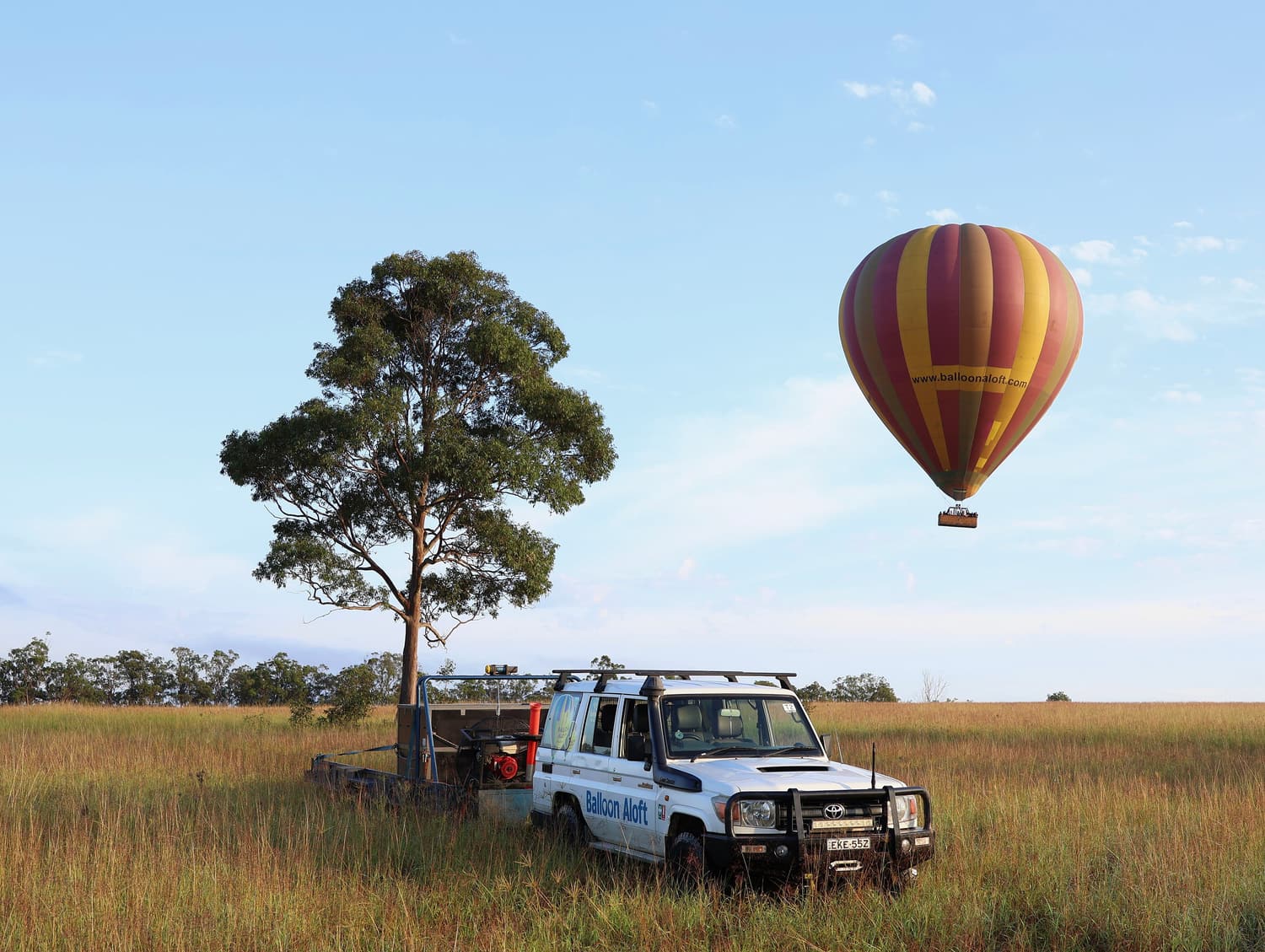
The classic Hunter Valley morning. You meet before dawn, watch the balloon inflate and drift over the vineyards as the sun comes up, then sit down to breakfast with a glass of sparkling wine at Peterson House. Flights depend on the weather, so book it for your first morning.
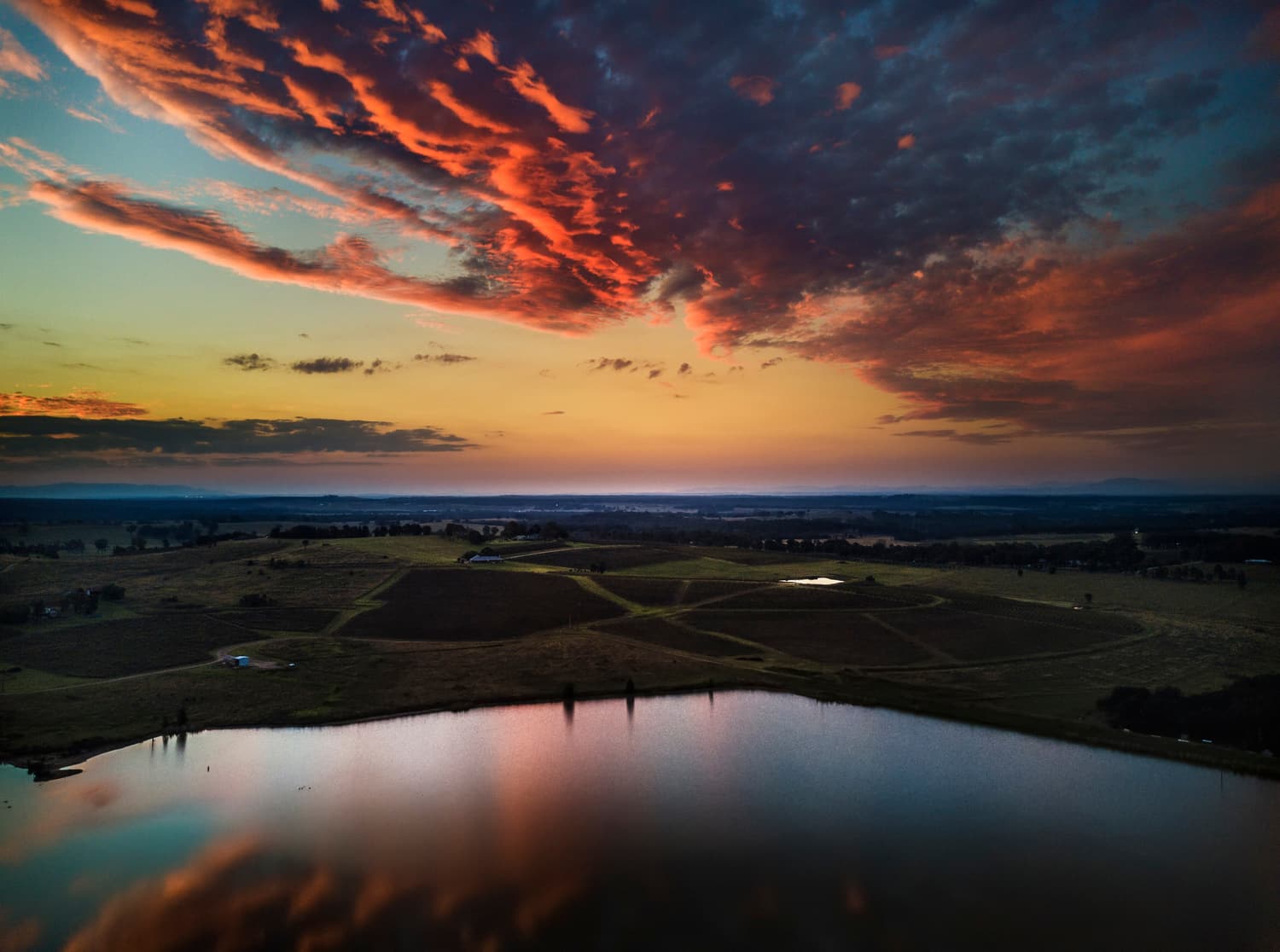
- Float over the vineyards of Pokolbin, Lovedale and Rothbury at sunrise
- About an hour in the air, wind and weather permitting
- Breakfast with sparkling wine at Peterson House afterwards
 Balloon flight from A$549
Sydney: Hunter Valley Sunrise Balloon Flight with Transfer
The sunrise balloon flight for people who are not staying in the valley: a very early pickup in Sydney, the flight over the vineyards and breakfast afterwards, then the transfer back. A long day, but it saves a night’s accommodation.
- Return transfer from Sydney included
- Sunrise balloon flight over the wine region
- Breakfast after landing
Scenic flight from A$150 Pokolbin: 10-Minute Helicopter Scenic Flight
A short helicopter flight over the heart of the wine region — vineyards, dams and the long wall of the Brokenback Range. Allow about half an hour including check-in and the safety briefing.
- The vineyards and the Brokenback Range from the air
- A short flight that fits into any day
- Small groups